


Multi-layer stratified oncology platform utilizing transcriptomics, prostate cancer organoids, and modeling of drug response
Gruppe Kruithof-de Julio Prof. Dr. phil. Marianna Kruithof-de Julio
Prostate cancer (PCa) presents a significant clinical challenge due to its multifocal and molecularly heterogeneous nature, with 60–90% of patients exhibiting multiple distinct lesions at diagnosis. Conventional treatment approaches often overlook this complexity, treating the prostate as a uniform entity and potentially missing critical lesion-specific therapeutic vulnerabilities.
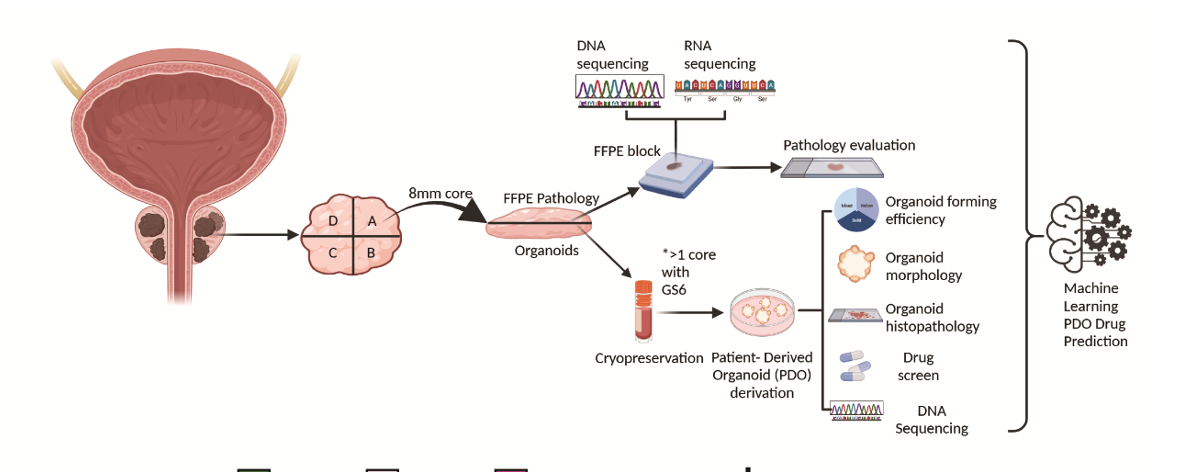
To address this, we developed a multi-layered oncology platform that integrates transcriptomic profiling, patient-derived organoids (PDOs), and functional drug screening to explore lesion-level heterogeneity and its impact on therapy response. Our objectives were to establish a twin-biopsy strategy enabling parallel molecular and functional characterization of individual lesions, generate and validate organoids from both tumor and benign tissues, identify molecular subtypes through transcriptomic clustering, and correlate these subtypes with drug sensitivity using machine learning models.
Ultimately, we aim to translate these insights into a stratified clinical workflow that supports personalized treatment decisions based on the unique molecular landscape of each patient’s disease.
Biopsies from 24 PCa patients were split into matched halves: one for histopathology and RNA sequencing, the other for organoid generation and drug screening. Organoids were successfully derived from both tumor and benign cores with a 73% success rate and characterized by immunofluorescence and genomic profiling. Transcriptomic data from FFPE samples underwent unsupervised clustering, revealing two stable molecular subtypes (C1 and C2). Drug screening involved 11 compounds, including androgen receptor and tyrosine kinase inhibitors. Machine learning models, based on pathway activity scores, were trained to predict drug sensitivity from transcriptomic data.
This integrated platform revealed that PDOs retain lineage fidelity and reflect the genomic landscape of their parental tissues. Notably, transcriptomic clustering identified subtypes with distinct drug sensitivities, C2 lesions showed heightened response to MET inhibitors like crizotinib and ponatinib, correlating with elevated MET phosphorylation.
The machine learning model reliably predicted drug response and stratified patients based on molecular subtype, with external validation from TCGA data supporting its clinical relevance. The proposed workflow combines molecular diagnostics with functional validation, enabling personalized treatment decisions even when organoid generation is not feasible.
Future directions include expanding to larger cohorts, incorporating imaging-guided biopsies, and initiating clinical trials to validate the platform’s utility in real-world settings.